A life in the water. — the water.
I started late, moved around a lot, and figured most of it out as I went. This is roughly how it happened.
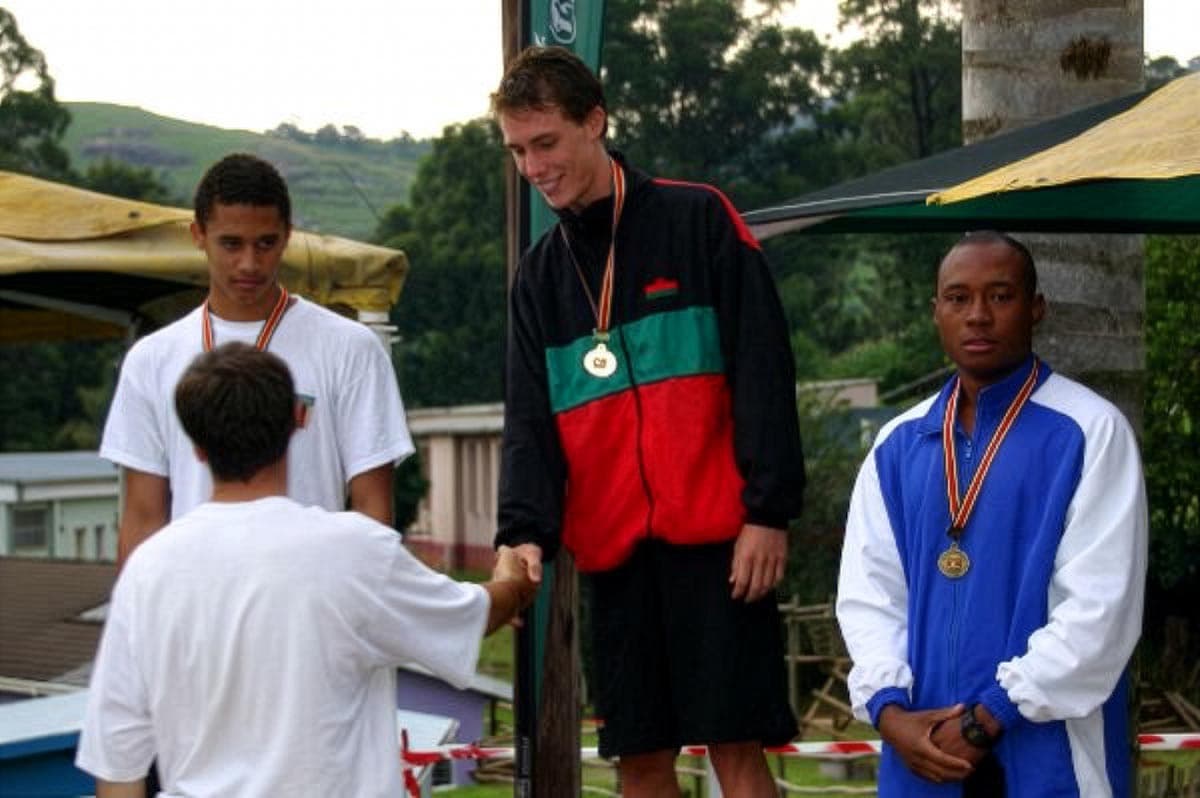
Started late. Figured it out anyway.
I picked up swimming at 15. I had no real background or training experience. But I was motivated to find a way to get faster. Within a few years, I was breaking national records and racing at the Manchester Commonwealth Games for Malawi.
Starting late meant I really had to learn how to work with the water in a way that most swimmers who start young never have to do. I didn't know it yet, but that would shape everything that came after.
Started late. Figured it out anyway.
I picked up swimming at 15. I had no real background or training experience. But I was motivated to find a way to get faster. Within a few years, I was breaking national records and racing at the Manchester Commonwealth Games for Malawi.
Starting late meant I really had to learn how to work with the water in a way that most swimmers who start young never have to do. I didn't know it yet, but that would shape everything that came after.
Two surgeries. One unexpected education.
Hip and groin surgeries in back-to-back years took me out of the water. I could have stepped back from the sport entirely. Instead, I went to every single practice. But I wasn't in the water.
I stood behind Ryan and watched. I really watched. I watched how he broke down the stroke. I watched what he chose to say. I watched how he structured his training sets and cycles. Two years of shadowing a coach like that will teach you more about coaching than any certification.
Three years later, I worked with Steve Schadt in the lead-up to the 2012 Olympic Trials. I'm grateful to both these men for helping me shape my craft as a coach.
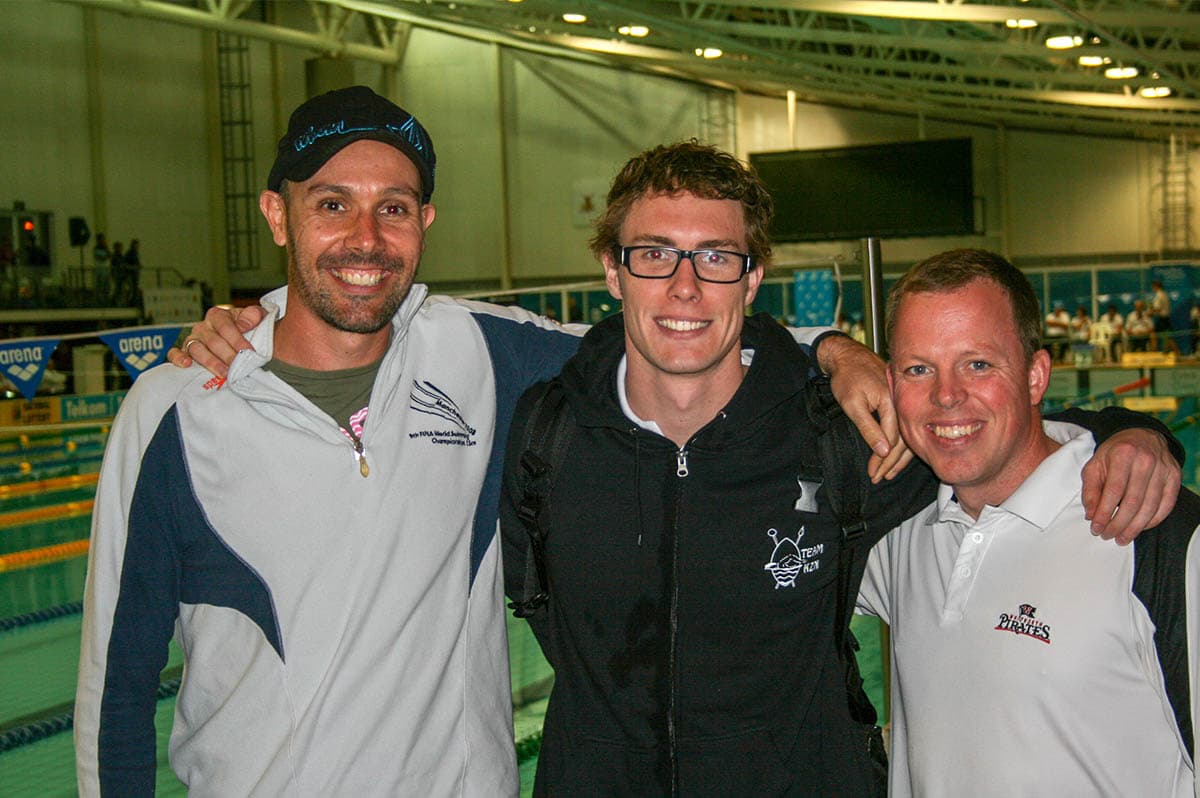
Two surgeries. One unexpected education.
Hip and groin surgeries in back-to-back years took me out of the water. I could have stepped back from the sport entirely. Instead, I went to every single practice. But I wasn't in the water.
I stood behind Ryan and watched. I really watched. I watched how he broke down the stroke. I watched what he chose to say. I watched how he structured his training sets and cycles. Two years of shadowing a coach like that will teach you more about coaching than any certification.
Three years later, I worked with Steve Schadt in the lead-up to the 2012 Olympic Trials. I'm grateful to both these men for helping me shape my craft as a coach.
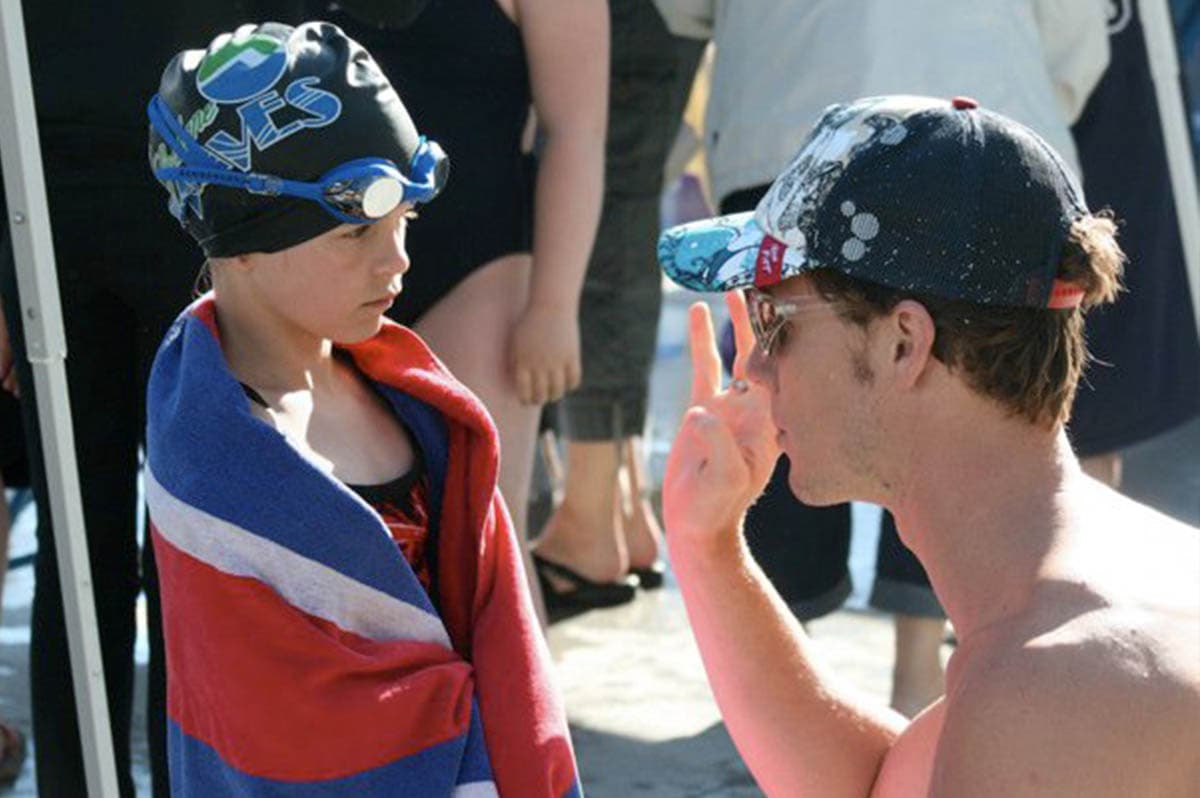
Refining the craft.
I moved to the USA for Whitworth University and joined the Spokane Waves coaching staff at the same time. Running sessions, developing younger swimmers, mentoring junior coaches — the craft I'd been building quietly over the years was now being used in a tangible way.
The club grew 200% in membership during this period. I'd like to think some of that was down to the coaching.
Refining the craft.
I moved to the USA for Whitworth University and joined the Spokane Waves coaching staff at the same time. Running sessions, developing younger swimmers, mentoring junior coaches — the craft I'd been building quietly over the years was now being used in a tangible way.
The club grew 200% in membership during this period. I'd like to think some of that was down to the coaching.
Four titles. One degree.
Four years, four NCAA Division III National Championships. Swimmer of the Year. National Record Holder. Academic All-American. And in 2011, the South African national team for the World University Games in Shenzhen.
It was the most competitive swimming of my life, and I was coaching on the side the whole time. The two things fed each other in ways that no weekend course will ever teach you.
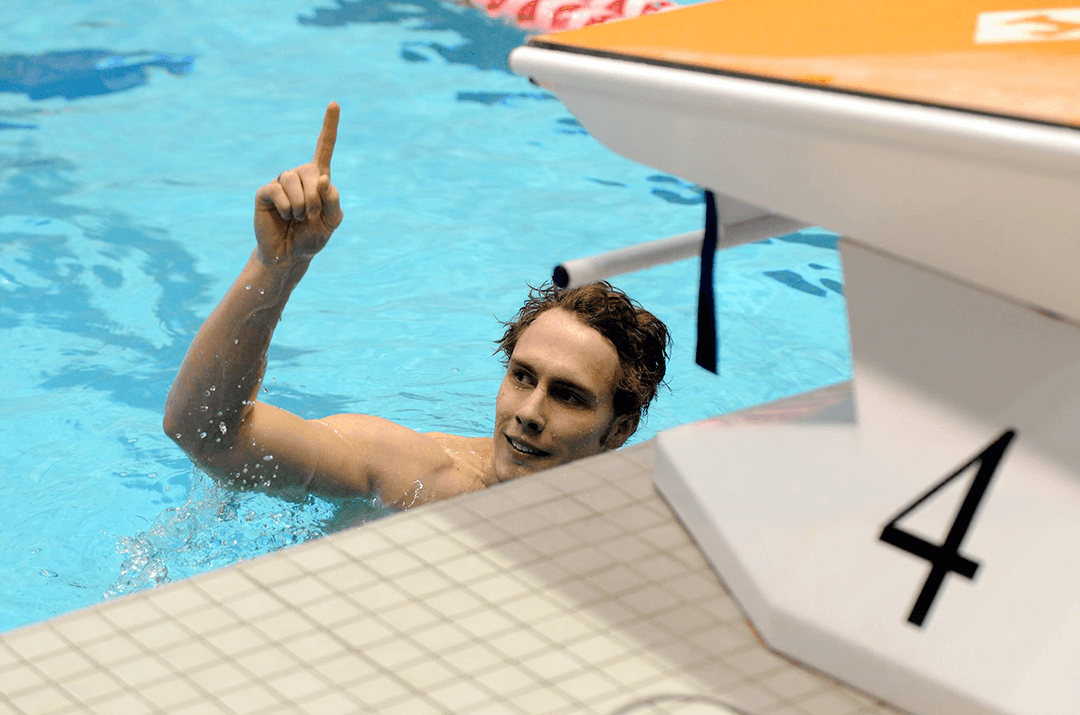
Four titles. One degree.
Four years, four NCAA Division III National Championships. Swimmer of the Year. National Record Holder. Academic All-American. And in 2011, the South African national team for the World University Games in Shenzhen.
It was the most competitive swimming of my life, and I was coaching on the side the whole time. The two things fed each other in ways that no weekend course will ever teach you.
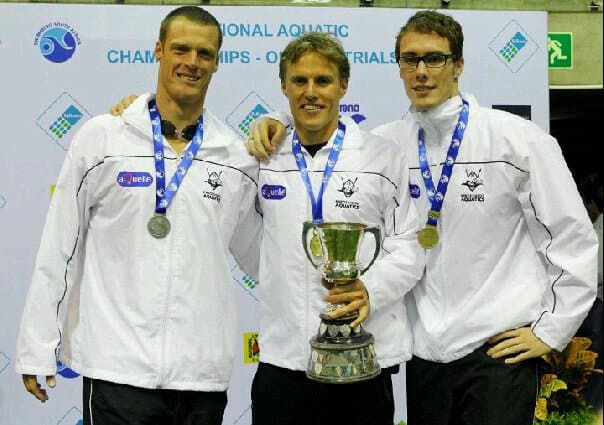
The last chapter as a competitive swimmer.
South African Nationals and the Olympic Trials in 2012 were the final competitive milestones as a swimmer. Standing on those podiums was the culmination of a long, unconventional swimming journey.
I'd started late, had two years taken away by surgery, raced across three continents, and still competed at the highest level. I was ready to step away from the water and put everything I'd learned into the swimmers I coached.
The last chapter as a competitive swimmer.
South African Nationals and the Olympic Trials in 2012 were the final competitive milestones as a swimmer. Standing on those podiums was the culmination of a long, unconventional swimming journey.
I'd started late, had two years taken away by surgery, raced across three continents, and still competed at the highest level. I was ready to step away from the water and put everything I'd learned into the swimmers I coached.
Building SwimFast.
I landed in Dubai in 2014 and started coaching immediately. The idea was simple: triathlon swimming was an afterthought for most age-group athletes and coaches. I wanted to raise the standard. Everything else — the video analysis, the individualised plans, the online model — followed from that.
500+ athletes and 1,500+ video analyses later, the core idea hasn't changed. I still watch every athlete at 0.25x speed and look at every Garmin split. That part doesn't get old.
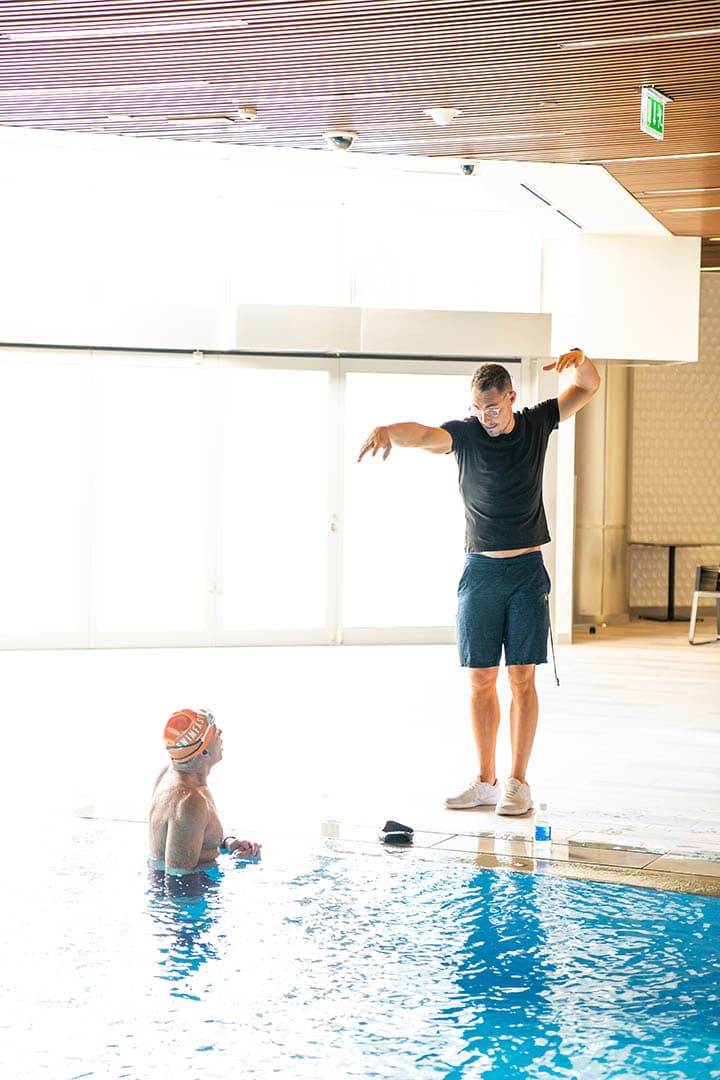
Building SwimFast.
I landed in Dubai in 2014 and started coaching immediately. The idea was simple: triathlon swimming was an afterthought for most age-group athletes and coaches. I wanted to raise the standard. Everything else — the video analysis, the individualised plans, the online model — followed from that.
500+ athletes and 1,500+ video analyses later, the core idea hasn't changed. I still watch every athlete at 0.25x speed and look at every Garmin split. That part doesn't get old.
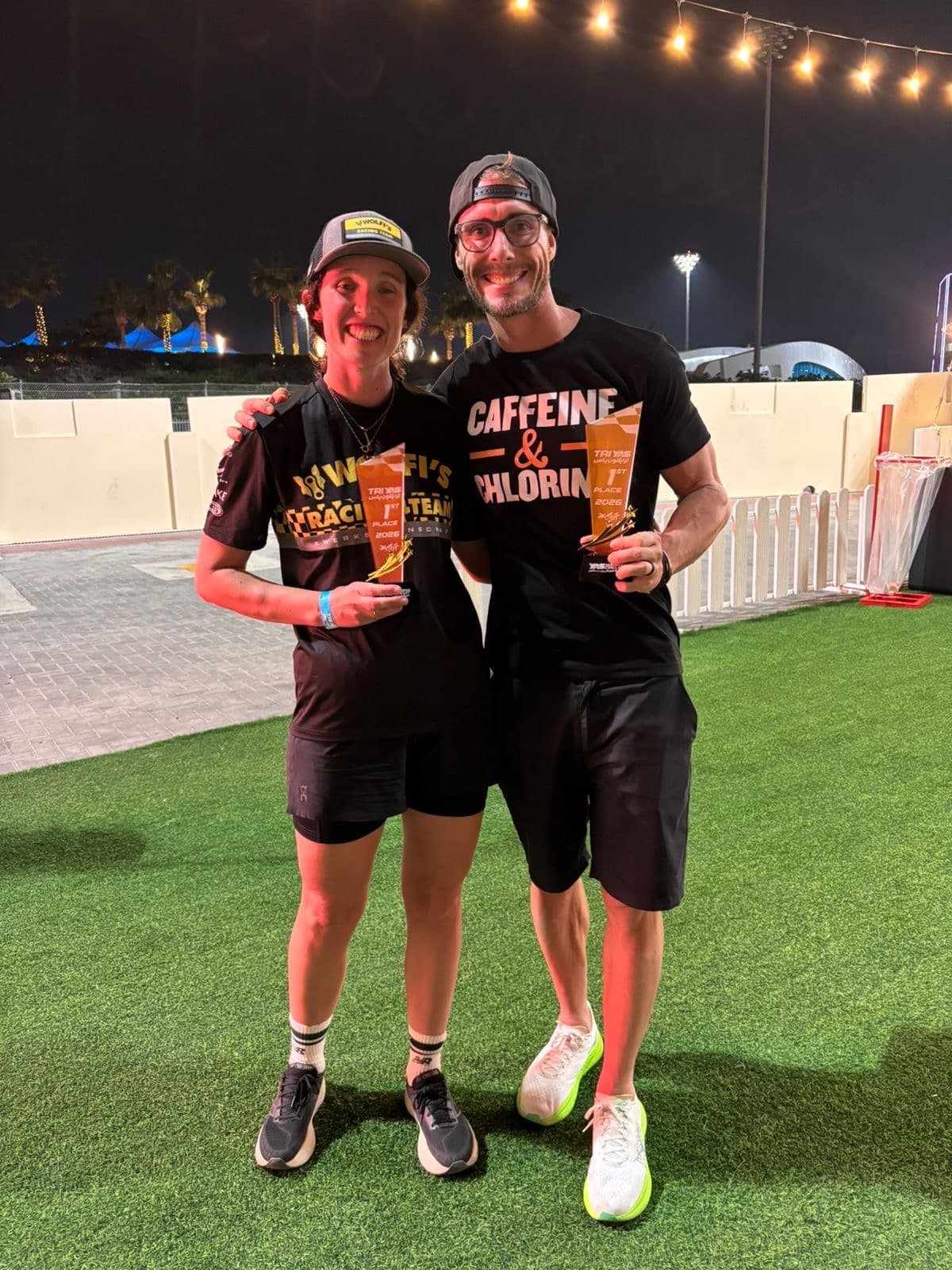
Built to last. Built to be fast.
AKHA is my latest coaching project — a collaboration with a friend and physio, Mel Abbey. Her thinking on physical durability and injury prevention matches my thinking on sustainability and the need for training to fit into an athlete's lifestyle.
The name AKHA is a Zulu word meaning "to build" — a hat tip to both our roots in Durban, South Africa. This is what I believe triathlon coaching should be: performance and sustainability as the same goal, not competing ones. And I'm excited to see where it goes.
Built to last. Built to be fast.
AKHA is my latest coaching project — a collaboration with a friend and physio, Mel Abbey. Her thinking on physical durability and injury prevention matches my thinking on sustainability and the need for training to fit into an athlete's lifestyle.
The name AKHA is a Zulu word meaning "to build" — a hat tip to both our roots in Durban, South Africa. This is what I believe triathlon coaching should be: performance and sustainability as the same goal, not competing ones. And I'm excited to see where it goes.